
For national resources, contacts and guidance on all aspects of DofE programmes, visit www.DofE.org


 |
|
 |
ExpeditionFind out more about Expedition section here |
 |
ResidentialFind out more about Residential section here |
 |
Assessor's ReportAssessor's can file their reports straight into a participant's eDofE account here |
 |
Forms and DownloadsFind forms and other downloads here |
 |
Mills, Mines & MaltsFind out about Mirfield's Past and Present |


National Navigation Award Scheme
 The National Navigation Award Scheme (NNAS) is a personal performance, non-competitive, incentive scheme for all ages to learn navigation skills and gain confidence to get out and enjoy the countryside.
* Would you like to enhance your enjoyment of the countryside?
* Would you like to develop sound navigation skills and practice including planning your own walking routes?
* Would you like to gain confidence at map reading whether the weather is clear or misty?
In doing so, you could achieve a personal performance award in navigation at the NNAS Bronze or Silver Levels, validated to a national standard.
National Navigation Award Scheme – Bronze Award
Training & Assessment
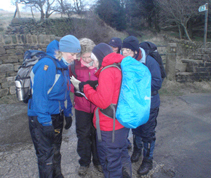
The NNAS Bronze award training and assessment course is designed to give people the skills to navigate in the countryside using paths, tracks and other linear features, basic map interpretation and compass work. This course has a minimum of 10 hours of training including assessment over a distance of between 3 and 5 kilometers of suitable countryside.
Bronze NNAS Award – The Learning Outcomes
+ Understand the nature of a map as a two dimensional plan.
+ Understand how to use map symbols and scales, on a variety of maps.
+ Take a 6 figure grid reference for any given position and also locate such a reference on the map.
+ Orientate the map with and without a compass.
+ Use the orientated map to identify land features and indicate direction of travel.
+ Choose simple navigation strategies and routes.
+ Use linear features (e.g. paths and tracks) as handrails in simple navigation exercises.
+ Estimate distance on both map and ground.
+ Using a basic understanding of contours, match major landforms like hills and valleys to their map representation.
+ Plan a safe, suitable walk.
+ Relocate using simple techniques on paths and other handrails.
+ Understand access rights and responsibilities.
+ Demonstrate an awareness of local and national access issues and access legislation.
+ Demonstrate knowledge of the Countryside Code, and of procedures to be followed in the event of an emergency.
National Navigation Award Scheme – Silver Award
Training & Assessment
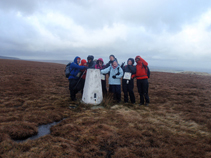
The NNAS Silver award training and assessment course is designed to give people the skills to navigate in the countryside using the skills acquired at the Bronze level along with the additional skills required to navigate to features and places some distance from paths and tracks. Accurate compass work is required and an ability to use appropriate navigation techniques to go cross-country, e.g. choosing appropriate attack point. This course has a minimum of 12 hours of training, including assessment over a distance of 5 - 8 kilometers in terrain which allows for the demonstration of appropriate skills.
Silver NNAS Award - The learning outcomes: (additional to those of the Bronze Award)
+ Devise a strategy for a navigational stage, to break it down into 'coarse' and 'fine' navigation and to use clear features en route to check that they are 'on course'.
+ Understand and apply the following components of a navigational strategy 'aiming off', 'attack points', 'collecting features', simplifying navigation, and apply them in varying terrain.
+ Demonstrate an understanding of contour features, both large and small, on the map and on the ground.
+ Demonstrate an understanding of the navigation physical and factors affecting route choice.
+ Judge distance accurately on the map and on the ground.
+ Plan a safe walk or route involving Silver award skills and strategies.
+ Employ simple relocation strategies when lost.
+ Use a compass to follow accurate bearings and to check the direction of footpaths or other linear features on both map and ground.
+ Demonstrate knowledge of the effects of fatigue and physical discomfort brought on by navigating in demanding countryside and/or extreme weather condition. Knowledge of basic first aid is also expected.
+ Demonstrate knowledge and application of the Countryside Code and current access legislation as for the Bronze level together with an appreciation of basic environmental factors in mixing 'man with nature' (e.g. footpath erosion and methods of dealing with it), and responsibilities towards other countryside interests like farming, forestry and conservation.


